
























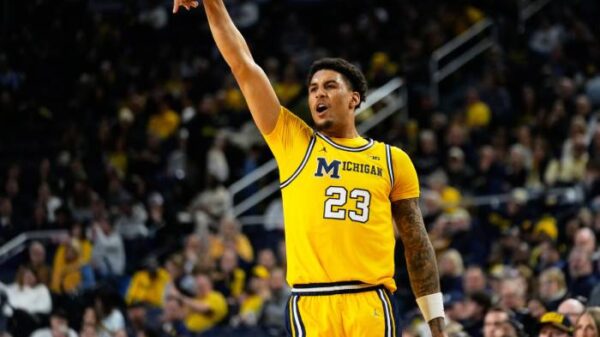
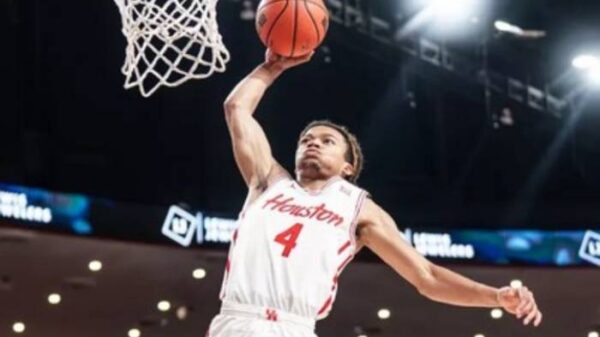




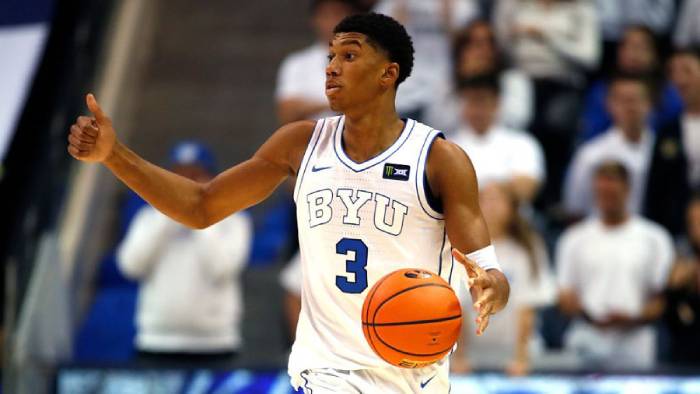
Two weeks into the college basketball season, the 2027 NBA Draft picture is beginning to take shape. While this year’s class lacks the clear-cut franchise talent of the past two drafts, several prospects are beginning to separate themselves. Bruce Branch III makes a significant jump to the top spot, while Alijah Arenas, Tyran Stokes and Jason Crowe Jr. remain firmly in the mix. Several newcomers have also emerged as potential first-round picks. Our updated mock incorporates early-season production alongside long-term upside, but with so much uncertainty surrounding this year’s class, expect considerable movement and plenty of surprises as the season progresses. With no clear-cut favorite at the top and numerous prospects still establishing themselves, this figures to be one of the more fluid drafts in recent memory.
1. Utah Jazz – Bruce Branch III
6-7, 195, SF, BYU, Fr.
Branch takes over the top spot in our latest mock, representing a substantial jump from No. 11 in July. Born October 24, 2008, the Gilbert, Arizona product is one of the youngest prospects eligible for the 2027 draft and possesses as much long-term upside as anyone in the class. He’s off to an encouraging start, averaging 14.8 points, 5.0 rebounds and 2.0 assists while shooting 53.8% from the field and 35.3% from three through BYU’s first four games. A naturally gifted wing with an ideal combination of size, length, fluid athleticism and offensive versatility, Branch has all the makings of a high-level NBA player. His ability to attack the basket, finish in transition and create scoring opportunities from the perimeter gives him legitimate three-level scoring potential. Defensively, his length and mobility allow him to guard multiple positions, while his anticipation makes him disruptive in passing lanes. The biggest question entering college was whether he could become more assertive and consistently impose his will offensively. Maintaining his efficiency while embracing a larger scoring role will be critical, and his 57.9% free throw shooting suggests there is still work to be done with his perimeter consistency. His shot creation and decision-making remain areas for development, but the physical tools, natural talent and overall skill level are clearly there. If he continues progressing, Branch has a legitimate chance to become the second BYU wing in consecutive drafts, following AJ Dybantsa, to hear his name called first overall.
2. Milwaukee Bucks – Alijah Arenas
6-6, 195, SG, USC, So.
Arenas slips one spot from our initial mock but remains firmly in the conversation for the top overall selection. The son of former NBA All-Star Gilbert Arenas, he is a walking bucket with one of the most advanced offensive skill sets in the class, combining exceptional ball-handling ability, creativity and natural scoring instincts. He’s off to a tremendous start, averaging 23.3 points and 6.3 rebounds while shooting 54.2% from the field through USC’s first three games, a significant improvement over his freshman season. His ability to change speeds, attack gaps and create his own shot makes him a difficult matchup for opposing defenses, highlighted by a 30-point performance against Wichita State. While his scoring prowess is undeniable, his 1.3 assists per game and just 22.2% shooting from three reveal areas that still need considerable improvement. How much of his limited playmaking production reflects his role within USC’s offense, as opposed to a score-first mentality, remains a legitimate question. Arenas possesses the size, vision and ball skills to become a more effective facilitator, but must demonstrate a greater willingness to create opportunities for teammates. His improved efficiency inside the arc is encouraging, though becoming a dependable perimeter shooter and more complete offensive weapon will be critical to maximizing his NBA potential. Durability also remains a consideration following the knee injury that interrupted his development. Few prospects in this class can match his natural scoring ability, and if he can expand his game beyond putting points on the board, Arenas has as much upside as anyone in the 2027 draft.
3. Sacramento Kings – Tyran Stokes
6-8, 230, SF/PF, Kansas, Fr.
Stokes moves up two spots and remains arguably the most physically imposing prospect in the class. The Louisville, Kentucky product is off to an encouraging start at Kansas, averaging 15.3 points, 7.3 rebounds and 2.3 assists while shooting 48.4% from the field through three games. His 23-point, 10-rebound, four-assist performance against Kentucky offered an early glimpse of his tremendous all-around potential. A powerful, explosive forward with outstanding mobility, Stokes possesses an unusual combination of strength, athleticism and ball skills. While his ability to attack downhill, finish through contact and dominate in transition stands out, it’s his passing ability and court vision that may be his most underrated attributes. He sees the floor exceptionally well for a player his size, displaying point-forward instincts and the ability to create scoring opportunities for teammates. His confidence is off the charts, and he possesses the alpha mentality to take over games and impose his will on opponents. His perimeter shooting remains somewhat inconsistent despite connecting on 41.7% of his three-point attempts early, and his 64.7% free throw shooting suggests his jumper remains a work in progress. Developing greater discipline with his shot selection and decision-making will be important, as will continuing to demonstrate maturity and coachability. Few prospects can match his combination of physical dominance, playmaking instincts and competitive fire. If he continues refining his perimeter skills and channels his considerable confidence into winning basketball, Stokes has every tool necessary to emerge as the No. 1 overall selection.
4. Chicago Bulls – Jason Crowe Jr.
6-4, 170, PG/SG, Missouri, Fr.
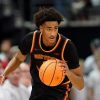
Crowe remains one of the most dynamic offensive guards in the draft and has gotten off to a fast start at Missouri, establishing himself as a candidate to lead all freshmen in scoring. One of the purest shooters in the class, he possesses exceptional scoring instincts, deep shooting range and an advanced offensive skill set for his age. His quickness, creativity and ability to change speeds allow him to consistently create separation from defenders, while his outstanding ball handling makes him extremely difficult to contain in isolation. Crowe has never seen a shot he didn’t like, displaying supreme confidence in his ability to score from virtually anywhere on the floor. While his reputation centers around his shooting and scoring prowess, his athleticism and point guard skills are somewhat underrated. He possesses excellent quickness, impressive body control and the ability to create opportunities for teammates, giving him the versatility to operate both on and off the ball. His willingness to hunt shots can occasionally lead to questionable decisions, and finding the right balance between scoring and facilitating will be important to his development. His slender frame remains a concern, particularly defensively and when finishing through contact against bigger, more physical opponents. Adding strength without sacrificing quickness will be essential. His polished offensive game, shooting ability and natural scoring instincts bring to mind elements of Darius Garland, and if he continues his early momentum, Crowe could establish himself as the premier freshman scorer in college basketball and a legitimate contender for the top overall pick.
5. LA Clippers – Quentin Coleman
6-4, 180, SG/PG, Illinois, Fr.
Coleman makes one of the biggest jumps in our updated rankings, moving from No. 20 into the top five. Looking like Keaton Wagler part two, the O’Fallon, Illinois product has followed a similar path as a less heralded recruit who has quickly emerged as the offensive engine of his team. He’s off to a tremendous start, averaging 17.0 points, 6.0 rebounds, 4.0 assists and 2.0 steals while shooting an impressive 60.6% from the field and 41.2% from three through his first three games. His 19-point, four-assist performance on the road against Texas Tech was particularly impressive, demonstrating his ability to produce efficiently against high-level competition. A dynamic combo guard with excellent quickness, explosiveness and a natural feel for the game, Coleman has exceeded expectations with his ability to run an offense and make those around him better. His point guard skills and court presence are considerably more advanced than advertised, displaying impressive vision, poise and an understanding of when to attack and when to facilitate. He’s a smart, competitive playmaker who thrives getting into the paint, putting pressure on defenses and creating opportunities for teammates. His early shooting efficiency has been a pleasant surprise, although his 50% free throw shooting and small sample size will need to improve. Defensively, his toughness, anticipation and active hands add to his appeal. While he lacks ideal size for an NBA shooting guard, his combination of athleticism, basketball IQ and emerging lead guard skills gives him considerable upside. Coleman has already leapfrogged a number of more highly regarded freshmen guards and is quickly establishing himself as one of the biggest breakout prospects in college basketball.
6. Brooklyn Nets – Obinna Ekezie Jr.
7-2, 245, C, Louisville, Fr.
Ekezie makes a major splash in our updated mock, emerging as one of the most intriguing big men in the 2027 draft. The son of former NBA center Obinna Ekezie, the Nigerian-born freshman possesses tremendous size, a strong physical foundation and an impressive combination of interior skills and perimeter shooting ability. Knocking down four three-pointers in a preseason game offered a preview of things to come, and he’s carried that shooting touch into the regular season, averaging 12.5 points, 6.5 rebounds and 1.5 blocks while shooting 69.2% from the field and 57.1% from three through Louisville’s first two games. His 20-point, 13-rebound performance against Morehead State has expectations for his freshman season soaring. At 7-foot-2, his ability to stretch the floor and knock down perimeter shots will inevitably draw some comparisons to Joel Embiid, although he remains a long way from possessing that level of offensive polish and versatility. Ekezie shows encouraging touch around the basket, the ability to finish with authority and the size to impact games defensively as a rim protector. His focused approach and willingness to develop his skills are additional positives. The biggest question is whether he can maintain his production and efficiency as the competition improves and his role expands. His limited minutes and small early-season sample make consistency an important factor in evaluating his lofty projection. Nevertheless, the combination of size, shooting touch and defensive potential is extremely rare, giving Ekezie one of the highest ceilings among the big men in this class. If he continues building on his impressive start, he could cement himself as a legitimate top-ten candidate.
7. Washington Wizards – Amari Allen
6-6, 205, SG/SF, Alabama, So.
Allen is quickly establishing himself as one of the most versatile guards in the country, displaying an impressive combination of scoring, rebounding and playmaking ability. The Green Bay, Wisconsin product is off to a tremendous start to his sophomore season, averaging 14.0 points, 6.3 rebounds and an eye-opening 7.0 assists while shooting 46.7% from three through Alabama’s first three games. His 16-point, 13-rebound, 11-assist triple-double against Arkansas State showcased his tremendous all-around skill set and ability to impact the game in multiple ways. At 6-foot-6, Allen possesses legitimate combo guard skills, displaying excellent court vision, passing instincts and the ability to initiate offense while also functioning as a versatile wing. His remarkable 7-to-1 assist-to-turnover ratio is particularly impressive, reflecting his basketball IQ, poise and ability to make sound decisions with the ball. A smooth, athletic offensive player, he excels attacking closeouts, finishing around the basket and creating opportunities for teammates without forcing the action. His early perimeter shooting improvement is another encouraging development after connecting on just 34.1% of his three-point attempts as a freshman. Defensively, his size, mobility and instincts give him the versatility to guard multiple positions. The biggest question remains whether he can sustain his improved shooting and become a more assertive offensive player against stronger competition. His ability to impact games without dominating the ball, combined with his emerging lead guard skills, gives him an extremely appealing NBA foundation. With shades of a smaller Brandon Miller in his offensive versatility, Allen has the potential to develop into one of the premier all-around prospects in the 2027 draft.
8. New Orleans Pelicans – Caleb Holt
6-5, 205, PG/SG, Arizona, Fr.
Holt moves up two spots and continues to offer one of the most complete two-way profiles among the freshman guards. The Huntsville, Alabama product is off to a solid start, averaging 15.0 points, 6.7 rebounds and 1.7 assists while shooting 51.4% from the field through Arizona’s first three games. A powerful, explosive combo guard with an already well-developed physique, Holt possesses a sports car-like combination of smoothness, speed and acceleration that allows him to blow past defenders and finish through contact. His ability to change gears, attack downhill and operate in transition makes him extremely difficult to contain, while his strength and athleticism allow him to impact games on both ends of the floor. Defensively, he possesses the lateral quickness, physicality and competitive mentality to guard multiple positions, with his 1.7 steals per game reflecting his ability to disrupt opposing offenses. While he has the ball-handling ability to initiate offense, Holt projects more naturally as a combo guard than a pure point guard, and improving his playmaking instincts and half-court decision-making will be important to his development. His biggest concern early has been his perimeter shooting, connecting on just 1-of-11 three-point attempts (9.1%) through three games. His 88.9% free throw shooting offers some encouragement that his outside shot can improve, but developing a reliable jumper will be essential to unlocking his full offensive potential. His combination of physical maturity, explosive athleticism and defensive versatility gives him an excellent NBA foundation. If his perimeter shooting catches up with the rest of his game, Holt has the tools to challenge for a spot among the top five picks.
9. Indiana Pacers – Kanon Catchings
6-9, 210, SF, Georgia, Jr.
Catchings drops a few spots from his No. 4 ranking in our initial mock, though his early-season play at Georgia has offered some encouraging signs. The talented junior forward is averaging 13.7 points, 4.7 rebounds and 1.0 steals through three games, shooting 42.9% from the field. Most encouraging has been his increased assertiveness and willingness to shoulder a larger offensive load, showing greater confidence attacking defenders and looking for his own offense. A long, fluid athlete with excellent positional size and intriguing perimeter skills, Catchings possesses the physical tools to develop into a versatile NBA wing. His combination of length, mobility and shooting potential allows him to stretch the floor, attack closeouts and finish above the rim, while offering the defensive versatility to guard multiple positions. The biggest question remains whether his offensive production can consistently match his considerable talent. After shooting a respectable 37.6% from three last season, his perimeter shot has yet to find its rhythm, connecting on just 21.4% of his attempts through three games. His 53.3% free throw shooting is another concern, particularly for a player whose NBA appeal is tied closely to his ability to space the floor. While his shooting mechanics remain promising, his overall efficiency and offensive consistency continue to fluctuate. Catchings has also struggled at times to impose himself on games, making his more aggressive approach at Georgia a welcome development. With two previous college seasons under his belt, the time has come for Catchings to translate his considerable upside into sustained production. If his outside shot returns to form and his efficiency levels out while maintaining his newfound offensive assertiveness, he could easily work his way back into the middle of the lottery.
10. Charlotte Hornets – Stefan Joksimovic
6-7, 185, SG, Slovenia, Intl.
Joksimovic remains one of the premier international prospects in the class, combining excellent positional size, length, creativity and an advanced understanding of the game. The 17-year-old Slovenian guard has been gaining valuable experience against high-level professional competition with Baskonia, averaging 5.1 points, 1.5 rebounds and 1.8 assists in EuroLeague play, along with 8.4 points, 2.6 rebounds and 1.6 assists in Spain’s Liga ACB. While his production remains modest, his ability to contribute against experienced professionals at such a young age is encouraging. Joksimovic particularly impressed at the 2026 adidas Eurocamp, earning MVP honors while showcasing his ability to push the ball in transition, create separation with explosive bursts off the dribble and generate offense in isolation. His combination of length, ball-handling ability and creativity allows him to attack defenses from multiple angles, while his excellent pace and body control help him operate effectively as both a scorer and facilitator. He possesses intriguing shooting potential and the confidence to create his own perimeter looks, although becoming a more consistent outside threat will be important. Defensively, his length is an asset, but improving his lateral quickness, physical strength and consistency against elite athletes remains a priority. At just 17, Joksimovic has considerable room for physical and skill development, and his experience competing against professionals should accelerate that process. His combination of size, offensive versatility and natural feel gives him one of the highest ceilings among the international prospects in the 2027 draft.
11. Orlando Magic – Braylon Mullins
6-7, 190, SG, UConn, So.
Mullins remains among the premier perimeter shooting prospects in the country, possessing an effortless stroke, excellent footwork and the ability to score from well beyond the three-point line. The Greenfield, Indiana product is off to a productive start to his sophomore season, averaging 17.7 points, 3.3 rebounds and 1.7 assists through UConn’s first three games, including an impressive 23-point performance against Michigan. While his scoring production has increased considerably from his freshman season, his shooting efficiency has yet to catch up, as he’s connecting on just 38.9% from the field and 30.8% from three. Those numbers are below expectations for a player with his shooting reputation, but his mechanics, quick release and 89.5% free throw shooting suggest his perimeter accuracy should improve as the season progresses. Mullins is particularly dangerous moving without the ball, using screens effectively and getting his feet set quickly to create clean looks. His ability to shoot off movement and from deep gives him a clear NBA calling card, while his improving ball handling and underrated athleticism offer additional offensive upside. The biggest concerns remain his slender frame, limited ability to create separation against physical defenders and inconsistency finishing through contact. Adding strength and expanding his off-the-dribble game will be important steps toward becoming a more complete offensive weapon. Despite his early shooting struggles, Mullins remains one of the most naturally gifted shooters in the class, and his increased scoring responsibility offers an opportunity to demonstrate that he can develop into considerably more than a perimeter specialist.
12. Toronto Raptors – Thomas Haugh
6-9, 220, SF/PF, Florida, Sr.
Haugh makes a substantial jump to No. 12, reflecting his experience, versatility and increasingly polished offensive skill set. The Florida senior is off to an excellent start, averaging 18.0 points, 9.0 rebounds and 2.7 assists while shooting 51.7% from the field and 50% from three through three games. His 21-point, 10-rebound performance on the road against Florida State highlighted his ability to produce against quality competition. One of the most accomplished upperclassmen in the country, Haugh possesses an outstanding motor, excellent basketball IQ and the versatility to impact games in numerous ways. He’s particularly effective attacking closeouts, moving without the ball and creating scoring opportunities through his activity and instincts. Perimeter shooting was a significant weakness last season, when he connected on just 32.6% of his three-point attempts, but his early improvement suggests it was a major point of emphasis during the offseason. His shooting mechanics and confidence appear to have taken a step forward, and sustaining that progress could significantly elevate his NBA outlook. Defensively, his toughness, mobility and competitiveness allow him to guard multiple frontcourt positions, while his rebounding and willingness to do the dirty work make him an attractive complementary piece. The biggest concern is his age, as he’ll be just weeks shy of his 24th birthday on draft night. Traditionally, that would significantly limit his perceived upside, but Yaxel Lendeborg has helped rewrite the rules regarding older prospects and their developmental potential. While Haugh lacks the explosive athleticism and long-term ceiling of some of the younger players projected around him, his maturity, productivity and well-rounded skill set give him a strong chance to contribute immediately at the NBA level. His combination of experience, versatility and winning attributes makes him one of the safer bets in this draft.
13. Phoenix Suns – Jordan Smith Jr.
6-2, 200, PG/SG, Arkansas, Fr.
Smith drops from No. 3 in our initial mock but remains one of the most intriguing combo guards in the class. The Washington, DC product is averaging 14.0 points, 3.7 rebounds, 2.3 assists and 2.3 steals through Arkansas’ first three games, including a 19-point, four-steal performance against Virginia. A powerful, explosive guard with a mature approach to the game, Smith possesses an unusual combination of strength, competitiveness and basketball IQ. His physical style, defensive intensity and ability to impact games on both ends of the floor bring to mind elements of Marcus Smart and Jrue Holiday. Despite standing just 6-foot-2, his excellent wingspan and strong frame allow him to play considerably bigger than his listed height. Smith is an extremely intelligent and mature individual who should thrive throughout the NBA interview process, with the type of character and competitive makeup teams value. His game and physical profile are somewhat unorthodox, however, and questions remain about his offensive fit at the next level. While he possesses advanced ball-handling ability and impressive creativity attacking the basket, he’s not a natural lead guard, and his ability to consistently create opportunities for teammates remains a work in progress. His shooting is an even greater concern early, connecting on just 25% from three and 60% from the free throw line through three games. His shooting stroke lacks ideal fluidity, raising questions about how much improvement can realistically be expected. Ultimately, much of his draft outlook will come down to offensive efficiency and whether he can develop into a dependable perimeter threat. His positional limitations and uncertain scoring upside may cap his ceiling, but his toughness, intelligence, defensive versatility and winning mentality give him a strong foundation to become a valuable NBA contributor.
14. Miami Heat – Davis Fogle
6-7, 200, SG, Gonzaga, So.
Fogle appears primed for a breakout sophomore season, getting off to a fast start while taking on a considerably larger offensive role for Gonzaga. The Anacortes, Washington product is averaging 22.0 points, 4.5 rebounds, 4.0 assists and 2.0 steals through his first two games, shooting 45.2% from the field and 36.4% from three. His back-to-back 22-point performances, including a victory over Purdue, highlight his growing confidence and ability to shoulder a greater scoring load. A crafty, lanky wing with excellent positional size and natural scoring instincts, Fogle is more than simply a perimeter shooting specialist. While he possesses a smooth shooting stroke and the ability to knock down outside shots, his greatest strength may be his creativity and ability to manufacture scoring opportunities using changes of pace, footwork and body control. He’s particularly effective attacking closeouts, finding openings in the defense and using his length to finish over smaller opponents. His improved playmaking has also been encouraging, as he’s demonstrated the vision and feel to create opportunities for teammates without forcing the action. Defensively, his length and anticipation give him the potential to develop into a versatile perimeter defender. The biggest concerns remain his lack of elite explosiveness, relatively slender frame and ability to consistently create separation against NBA-level athletes. Adding strength and becoming a more efficient scorer as his offensive responsibilities increase will be important. Fogle’s combination of size, craftiness, scoring versatility and basketball IQ gives him an appealing NBA profile, and his early production suggests he could be one of the nation’s biggest sophomore breakout performers.
15. Cleveland Cavaliers – Michael Ruzic
7-0, 235, C, LSU, Fr.
Ruzic makes his debut in our updated first-round projections after an impressive start to his college career at LSU. The Croatian big man, who was once considered a potential first-round pick while playing professionally in Europe, saw his stock slip due to a thumb injury that interrupted his development and raised questions about his long-term progress. Those concerns appear to be fading, as Ruzic looks noticeably more fluid and explosive while carrying additional muscle on his 7-foot frame. He’s leading LSU in scoring despite coming off the bench, averaging 15.7 points, 7.3 rebounds, 2.0 assists and 1.3 blocks in just 22.3 minutes per game while shooting a remarkable 77.8% from the field. His offensive skill set has always been intriguing, particularly his ability to face up, handle the ball and create scoring opportunities away from the basket. What’s most encouraging is the development of his post game, giving him a more complete offensive arsenal to complement his perimeter skills. Ruzic displays impressive coordination, soft touch and body control for a player his size, with the ability to finish around the basket and operate effectively in the high post. His improved strength has also made him more effective establishing position and finishing through contact. While his outside shooting remains a work in progress, connecting on just 16.7% of his three-point attempts early, his shooting mechanics and natural touch suggest room for improvement. Defensively, his improved mobility and length give him the tools to become an effective interior presence, although his lateral quickness and ability to defend in space will be tested against stronger competition. Maintaining his health and proving his early production is sustainable will be critical. With his combination of size, fluidity and expanding offensive versatility, a lottery selection is well within reach if his strong play continues.
16. New York Knicks – Abdou Toure
6-5, 215, SG/SF, Arkansas, Fr.
Toure makes his debut in our first-round projections, leapfrogging a number of more highly regarded freshmen, including Jordan Smith Jr., on the strength of his extraordinary physical tools and long-term upside. He is one of the most explosive athletes in college basketball, possessing elite leaping ability, tremendous body control and the type of above-the-rim athleticism that rivals even Arkansas teammate Billy Richmond. He’s off to an encouraging start, averaging 9.7 points in just 16 minutes per game while shooting an impressive 61.1% from the field through three contests. A powerful, dynamic wing with an aggressive attacking mentality, Toure thrives in transition, where his speed, explosiveness and ability to finish through contact make him a constant threat. His athletic gifts also give him considerable defensive potential, with the lateral quickness and physicality to develop into a versatile perimeter stopper. Currently sporting a protective face mask after suffering a broken nose, Toure has shown flashes of offensive skill beyond his highlight-reel athleticism. His perimeter shooting remains a work in progress, however, as he’s connected on just 20% of his three-point attempts early in the season. His encouraging 85.7% free throw shooting offers some optimism regarding his long-term shooting development. Improving his ball handling, offensive polish and overall consistency will be essential, particularly as he begins facing more demanding competition and earns a larger role. While his current production remains relatively modest, his combination of strength, explosiveness and emerging offensive ability gives him one of the more intriguing ceilings in the class. If his outside shot continues to develop, watch out. Toure has the physical talent to rise considerably higher as the season progresses.
17. Dallas Mavericks – Christian Collins
6-8, 200, SF, USC, Fr.
Collins remains one of the highest-upside forwards in the class, though his freshman season at USC has gotten off to a delayed start. The former five-star recruit and McDonald’s All-American has been sidelined through the opening portion of the season after missing the Trojans’ preseason exhibitions, with the specific reason for his absence remaining undisclosed. A highly regarded prospect out of St. John Bosco High School in Southern California, Collins possesses an intriguing combination of positional size, fluid athleticism and offensive versatility. At 6-foot-9, he’s an exceptionally smooth athlete with the ability to handle the ball in the open floor, attack defenders off the dribble and finish explosively above the rim. His length, mobility and body control give him the potential to develop into a versatile two-way forward capable of creating mismatches offensively while defending multiple positions. Collins has also shown flashes of perimeter shooting ability, although his consistency from outside and overall offensive decision-making remain areas for improvement. His slender frame presents another challenge, particularly when finishing through contact and battling more physical opponents around the basket. With his college debut still on hold, Collins remains more of a projection than many of the prospects surrounding him in the rankings. His eventual return and ability to establish a consistent role in Eric Musselman’s rotation will be important in determining his draft trajectory. Few forwards in this class possess his combination of size, ball skills and athletic upside, and a strong freshman campaign could quickly move him back into the lottery discussion.
18. Atlanta Hawks – Miikka Muurinen
6-11, 210, PF, Arkansas, Fr.
Muurinen has gotten off to a rough start to his freshman season at Arkansas, though his extraordinary physical gifts and long-term upside remain unmistakable. The Finnish forward is averaging 8.0 points, 4.0 rebounds and 2.0 assists in 18.7 minutes per game through three contests, shooting just 30% from the field and 25% from three. His early struggles highlight the considerable adjustment he faces transitioning from a free-flowing, athletic style of play to a more structured college system. At seven feet tall, Muurinen is an exceptional athlete with explosive leaping ability, impressive mobility and intriguing perimeter skills. His ability to run the floor, finish spectacularly above the rim and handle the ball in transition gives him a unique offensive profile. However, developing a more reliable outside shot and learning to consistently create offense for himself in the half court will be essential to unlocking his potential. His decision-making, shot selection and overall offensive efficiency remain works in progress, as he’s still learning how to maximize his abilities within a team concept. Encouragingly, Muurinen appears to be making strides in embracing a more disciplined approach and understanding the importance of playing within the system. Defensively, his length and athleticism provide tremendous upside, but improving his toughness, physicality and awareness will be critical. Adding strength is another priority, particularly when battling more experienced frontcourt players. Arkansas provides an excellent environment for his development, with John Calipari and his staff well equipped to help him channel his considerable talent into more consistent production. Few players in this class possess Muurinen’s combination of size, athleticism and potential versatility. While his early struggles reinforce just how raw he remains, his ceiling is among the highest in the draft. His ability to become a more disciplined, efficient and dependable two-way player will ultimately determine how high he rises.
19. Denver Nuggets – Ivan Kharchenkov
6-7, 230, SF, Arizona, So.
Kharchenkov has emerged as one of the early breakout performers in college basketball, taking on a much larger offensive role for Arizona after averaging 10.4 points per game as a freshman. The German forward is averaging an impressive 24.7 points, 9.0 rebounds, 5.0 assists and 2.0 steals through three games while shooting 58.5% from the field. His season-opening 38-point performance against UCLA was particularly eye-opening, demonstrating his ability to put up a significant scoring outburst against quality competition. A strong, physically mature wing with excellent basketball instincts, Kharchenkov plays a smooth, controlled style that relies more on precision, timing and skill than overwhelming explosiveness. His ability to attack the basket, absorb contact and finish through defenders makes him a difficult matchup, while his improved playmaking has been equally encouraging. He’s shown impressive court vision and an ability to create opportunities for teammates, averaging five assists per game and displaying a more complete offensive arsenal than he did a season ago. Defensively, his strength, positional size and understanding of the game give him the versatility to match up against multiple positions, although his athleticism is more fluid than explosive. The biggest question surrounding his NBA outlook remains his perimeter shooting. He’s connecting on just 30% from three and 74.2% from the free throw line, numbers that don’t yet suggest an elite outside shooter. While his scoring efficiency inside the arc has been excellent, becoming a reliable three-point threat will be essential to maximizing his value as an NBA wing. His lack of elite burst also raises questions about how consistently he can create separation against NBA defenders. Kharchenkov’s combination of physicality, feel for the game and rapidly improving production makes him an intriguing first-round prospect. If he can establish himself as a high-level perimeter shooter while maintaining his impressive all-around production, he could seriously contemplate entering the 2027 draft and potentially work his way into the middle of the first round.
20. Memphis Grizzlies – Hugo Yimga Mouko
6-8, 220, SF, France, Intl.
Yimga-Moukouri continues to establish himself as one of the more intriguing young forwards in Europe, showing encouraging development while competing against experienced professionals in France’s top league. The 18-year-old French prospect is averaging 10.1 points and 6.0 rebounds in domestic competition, along with 11.0 points and 5.0 rebounds in Basketball Champions League play. At 6-foot-8, he possesses an impressive combination of positional size, strength and physical maturity, allowing him to compete effectively against older opponents despite his youth. A powerful, aggressive forward who embraces contact, Yimga-Moukouri is particularly effective attacking the basket, using his strong frame and body control to finish through defenders. While a little stiff athletically for a modern 3/4, he compensates with physicality, determination and an understanding of how to utilize his strength. His developing outside shot is perhaps the most intriguing aspect of his offensive game, giving him the potential to stretch the floor and create mismatches against opposing forwards. His combination of size, shooting touch and physicality makes him an appealing prospect, particularly if he can establish himself as a consistent perimeter threat. His ball handling and ability to create offense independently remain works in progress, as he’s currently more effective attacking openings than consistently generating his own shot. Defensively, his strength and willingness to compete give him the potential to guard multiple positions, although his lack of great flexibility and elite lateral quickness could present challenges defending quicker NBA wings. What makes Yimga-Moukouri particularly appealing is his ability to contribute meaningful production against professional competition at such a young age. While his athletic limitations may prevent him from developing into a high-level shot creator or versatile perimeter defender, his combination of size, toughness and outside shooting gives him a realistic opportunity to land in the middle of the first round.
21. Oklahoma City Thunder – Collin Chandler
6-6, 210, SG, BYU, Jr.
Chandler moves up six spots in our latest mock, continuing to establish himself as one of the more dependable and efficient guards in the country. The former highly regarded high school recruit, whose development took an unconventional path after spending two years on a Mormon mission, has emerged as a consistent offensive contributor for BYU. Through four games, he’s averaging 14.0 points, 3.0 rebounds, 2.3 assists and 1.8 steals while shooting an impressive 51.4% from the field and 41.7% from three. He’s scored in double figures in all four contests, displaying the type of consistency and offensive efficiency that NBA teams value. At 6-foot-6, Chandler possesses excellent positional size, a smooth perimeter shooting stroke and surprising explosiveness that allows him to finish above the rim. His athleticism is better than advertised, and his ability to operate both on and off the ball gives him considerable versatility. Perhaps most impressive has been his decision-making, averaging just 0.5 turnovers per game while posting an excellent 4.5-to-1 assist-to-turnover ratio. His ability to contribute without dominating the ball makes him an appealing complementary piece alongside more ball-dominant offensive players. Chandler will turn 23 in February, making him considerably older than most prospects in this class and limiting his perceived long-term upside. Questions also remain about his ability to consistently create separation and generate offense against elite NBA defenders. However, his combination of shooting, athleticism, maturity and efficient decision-making gives him a relatively clear path to becoming a productive role player at the next level. While he may lack the star potential of younger prospects, Chandler’s polished offensive game and consistent production make him an intriguing option in the mid to late first round.
22. Golden State Warriors – Klark Reithauser
6-8, 200, SF, Switzerland, Intl.
Riethauser remains one of the more intriguing international wing prospects in the class, although his lack of playing time through the opening portion of the season has limited opportunities to evaluate his development. The 18-year-old Swiss forward, currently with Élan Chalon in France’s top professional league, possesses an appealing combination of size, athleticism and offensive versatility. At 6-foot-8, he’s a fluid, explosive athlete with impressive ball-handling ability for his size and the confidence to attack defenders off the dribble. His ability to push the ball in transition, finish above the rim and create opportunities for teammates gives him considerable upside as a versatile offensive weapon. Riethauser also displays encouraging passing instincts and creativity, showing flashes of the ability to initiate offense rather than simply operate as a traditional wing. Defensively, his length, lateral mobility and athleticism provide the foundation to develop into a versatile perimeter defender capable of matching up against multiple positions. His biggest concerns remain his slender frame, inconsistent outside shooting and lack of proven production against high-level professional competition. Adding strength and becoming a more dependable perimeter threat will be important steps in his development. With no meaningful early-season playing time to evaluate, his draft stock remains largely based on his physical tools and previous performances rather than current production. Riethauser remains a high-upside developmental prospect with the size, athleticism and ball skills to eventually emerge as a lottery-caliber talent, but he’ll need opportunities to demonstrate that his considerable potential is translating into tangible progress.
23. Portland Trail Blazers – Adonis Ratliff
7-0, 230, PF/C, USC, Fr.
Ratliff makes his debut in our first-round projections after an impressive but somewhat uneven start to his freshman season at USC. The Atlanta, Georgia product is averaging 11.7 points, 6.3 rebounds, 1.3 blocks and 1.3 steals in just 20.3 minutes per game, shooting 52.6% from the field and an encouraging 45.5% from three. His 25-point breakout performance against Milwaukee, in which he connected on five of seven three-point attempts, offered an exciting glimpse of his offensive potential. He followed that with a 10-point, 13-rebound effort against Wichita State, demonstrating his ability to impact games on the glass even when his outside shot isn’t falling. However, his scoreless four-minute appearance against California illustrates the inconsistency that could remain a recurring theme throughout his freshman season. A talented, mobile frontcourt prospect with intriguing shooting touch and defensive potential, Ratliff possesses the tools to develop into a versatile modern big man. His ability to stretch the floor while providing rebounding and rim protection gives him an appealing combination of skills, particularly if his perimeter shooting proves sustainable. His 83.3% free throw shooting offers additional encouragement regarding his shooting development. Ratliff and his twin brother both dealt with relatively minor injuries that limited their availability during portions of their high school careers, contributing to questions about their availability and consistency. Establishing durability, improving his physical strength and demonstrating that he can produce against higher-level competition will be important steps moving forward. His offensive game remains a work in progress, particularly his ability to create scoring opportunities independently and maintain efficiency when opponents take away his perimeter looks. While his early performances have been uneven, Ratliff’s combination of shooting potential, rebounding and defensive activity gives him legitimate first-round upside. His twin brother Darius is another intriguing developmental prospect with NBA potential, making both brothers worth monitoring closely as their college careers unfold.
24. Detroit Pistons – Matt Able
6-5, 195, SG, North Carolina, So.
Able moves up two spots in our latest mock, showing encouraging signs of offensive development as he looks to establish himself as one of the more intriguing shooting guards in the ACC. Through three games, the North Carolina sophomore is averaging 11.7 points, 2.7 rebounds and 2.0 assists in just 22.7 minutes per game, shooting an impressive 59.1% from the field and 41.7% from three. His efficiency has been particularly encouraging after shooting 41.6% from the field and 35.5% from three as a freshman. A fundamentally sound offensive player with excellent shooting mechanics, Able possesses a compact, repeatable jumper and the ability to score both off the catch and when attacking closeouts. At 6-foot-5, he has good positional size and an intriguing combination of shooting touch and athleticism. While he can appear somewhat slow-footed operating in the half court, he possesses surprising explosiveness and the ability to finish above the rim. His natural feel for the game and willingness to play within the offense are positives, although becoming more assertive and consistently creating his own scoring opportunities remain important areas for improvement. His early production has been somewhat uneven, with an 18-point performance in the opener followed by games of six and 11 points. Establishing greater consistency and finding ways to impact games offensively when his outside shot isn’t falling will be important as the competition improves. Defensively, he has the physical tools to match up with either backcourt position, but will need to demonstrate greater consistency and effectiveness on that end. His ability to make quick decisions and limit mistakes adds to his appeal as a potential complementary NBA guard. While he doesn’t possess elite quickness or advanced shot-creation skills, Able’s combination of shooting ability, solid athleticism and offensive efficiency makes him an intriguing shooting guard prospect. If he can become a more consistent and assertive scorer while maintaining his improved shooting percentages, he has a legitimate opportunity to solidify himself as a late first-round selection.
25. Houston Rockets – Patrick Ngongba II
6-11, 250, C, Duke, Jr.
Ngongba has taken another step forward in his junior season at Duke, emerging as a more productive offensive option while continuing to provide a strong interior presence. Through three games, he’s averaging 16.3 points, 7.7 rebounds, 2.7 assists and 2.0 blocks in 26 minutes per game, shooting 57.7% from the field. His 28-point performance against Coastal Carolina demonstrated his ability to dominate offensively around the basket, while his 11-point, seven-rebound, six-assist and four-block showing against Michigan State highlighted his versatility and ability to impact games even when his shot isn’t falling. At 6-foot-11 and 250 pounds, Ngongba possesses excellent size, strength and a physical playing style that allows him to establish deep post position, finish through contact and battle effectively on the glass. One of his more underrated attributes is his passing ability, as he displays excellent vision and an understanding of how to facilitate offense from the high and low post. His improved conditioning and mobility have also helped him become a more effective defensive presence, using his size and positioning to protect the rim. However, his lateral quickness and ability to defend in space remain concerns, particularly against quicker NBA big men and perimeter-oriented offenses. Offensively, expanding his shooting range would significantly enhance his versatility, although his early 28.6% three-point shooting and 58.6% free throw shooting suggest he still has considerable work to do in that area. His lack of elite explosiveness also limits some of his upside as a finisher and defensive playmaker. While Ngongba may not possess the dynamic athleticism or offensive ceiling of some of the younger centers in this class, his strength, toughness, passing instincts and improving production give him a relatively high floor. His ability to contribute on both ends without requiring a high volume of touches makes him an appealing prospect for teams seeking a dependable interior presence. Continued improvement in his mobility, shooting and overall offensive efficiency could solidify his standing as a late first-round selection.
26. Minnesota Timberwolves – Luigi Suigo
7-4, 290, C, Villanova, Fr.
Suigo has made an impressive transition from European basketball to the college game, quickly establishing himself as one of the more intriguing freshman centers in the country. The massive Italian big man is averaging 14.0 points, 10.7 rebounds, 3.3 assists and 2.3 blocks through three games, shooting an outstanding 70.4% from the field. His 16-point, 15-rebound, four-block performance against Holy Cross and 19-point, 12-rebound, five-assist showing against La Salle demonstrate the considerable impact he can have on both ends of the floor. At 7-foot-4 and 290 pounds, Suigo possesses an enormous frame and surprisingly good mobility for a player his size. His ability to establish position around the basket, finish efficiently through contact and control the glass gives him a tremendous physical advantage. What makes him particularly intriguing is his developing offensive skill set, including encouraging shooting touch and the potential to eventually stretch the floor. While he’s connected on just 25% of his three-point attempts and 50% from the free throw line, his shooting mechanics and willingness to take perimeter shots suggest there is room for growth. He’s also an underrated passer, displaying impressive court vision and the ability to find cutters and open teammates, averaging 3.3 assists per game. Defensively, his sheer size and length make him a formidable rim protector, although his lateral quickness and ability to defend smaller, more explosive opponents in space remain concerns. His conditioning and overall mobility will also be tested as the competition improves. Suigo is still adapting to the speed, physicality and demands of the college environment, and his early production suggests he’s handling that transition well. While he lacks elite vertical explosiveness, his combination of massive size, improving mobility, passing instincts and shooting potential brings to mind elements of Aday Mara. With continued development and greater consistency against high-level competition, Suigo has a realistic opportunity to move into the top 20 picks of the 2027 draft.
27. Philadelphia 76ers – Alex Condon
7-0, 220, PF/C, Florida, Sr.
Condon is off to a somewhat slow start offensively in his senior season, but remains one of the more dependable and versatile big men in college basketball. The Australian forward is averaging 10.7 points, 9.7 rebounds, 4.3 assists and 1.3 blocks through three games, shooting 55% from the field. While his scoring is down from the 15.1 points he averaged last season, his ability to impact winning in a variety of ways remains a major asset for a Florida team currently ranked No. 1 in the country and expected to contend for another national championship. At 6-foot-11, Condon possesses excellent mobility, a relentless motor and an impressive feel for the game. He’s a classic glue guy and offensive connector, consistently making intelligent decisions, setting effective screens, moving the ball and doing the little things that contribute to team success. His passing ability is particularly impressive for a player his size, highlighted by an eight-assist performance against Jacksonville. An intriguing athlete with good coordination and mobility, Condon runs the floor well, finishes effectively around the basket and competes with tremendous energy on the glass. Defensively, his activity, positioning and willingness to battle make him a valuable presence. The biggest question surrounding his draft outlook remains his perimeter shooting, as he’s connecting on just 25% from three after shooting 17% last season. Developing a reliable outside shot would significantly enhance his versatility and ability to play alongside another traditional big man. His offensive ceiling is also somewhat limited by his lack of advanced shot-creation skills, making him more effective as a complementary piece than a featured scorer. However, Condon’s high character, competitiveness, basketball IQ and willingness to do whatever is necessary to help his team win give him considerable appeal. While he may not possess the upside of some younger prospects, his combination of mobility, passing instincts and all-around effectiveness makes him an intriguing late first-round option for teams seeking a dependable, team-oriented frontcourt player.
28. San Antonio Spurs – Dash Daniels
6-6, 195, SG/PG, South East Melbourne Phoenix (Australia), Intl.
Daniels has emerged as one of the more encouraging early-season bounce-back stories among international prospects, showing considerable improvement after a miserable campaign a year ago. The younger brother of NBA standout Dyson Daniels is beginning to display some of the defensive instincts, versatility and basketball intelligence that have made his older brother such a valuable player at the next level. Through 11 games with South East Melbourne Phoenix in Australia’s NBL, Daniels is averaging 12.4 points, 4.9 rebounds and 2.3 assists in 24.8 minutes per game, shooting an impressive 50.5% from the field and 39.1% from three. At 6-foot-6, he lacks the size and length of his older brother, but possesses an intriguing combination of perimeter skills, defensive awareness and positional versatility. His ability to anticipate plays, disrupt passing lanes and defend multiple backcourt positions gives him a strong foundation, while his developing offensive game has been a pleasant surprise. Daniels has shown encouraging flashes as a combo guard, demonstrating the ability to handle the ball, facilitate offense and create scoring opportunities without dominating possessions. His improved perimeter shooting has been particularly noteworthy, although his 56% free throw shooting raises questions about how sustainable his early three-point accuracy will be. Developing greater consistency as a shooter and becoming more assertive creating offense against pressure will be important as he continues to mature. While he isn’t an elite athlete or particularly explosive attacking the basket, his feel for the game and ability to contribute in multiple areas help compensate for those limitations. His defensive potential remains a major selling point, although he’ll need to add strength and continue refining his technique to become a reliable NBA defender. Daniels still has considerable ground to make up after last season’s struggles, but his improved production and growing confidence against professional competition have put him back on the NBA radar. If he can maintain his offensive efficiency while continuing to develop his defensive versatility and playmaking, he has a legitimate opportunity to establish himself as a late first-round prospect.
29. Boston Celtics – Motiejus Krivas
7-2, 260, C, Arizona, Sr.
Krivas has gotten off to an impressive start to his senior season, emerging as one of the more productive traditional centers in college basketball. The massive Lithuanian big man is averaging 18.0 points, 8.0 rebounds and 2.7 blocks through three games, shooting a remarkable 73.1% from the field and 80% from the free throw line. His 30-point performance against Cal Poly showcased his developing offensive arsenal, while his six-block effort against UCLA demonstrated the impact he can have as a rim protector against high-level competition. At 7-foot-2 and 260 pounds, Krivas possesses an enormous frame and moves surprisingly well for a player his size. He’s an extremely tough, competitive big man who embraces physical play and uses his strength effectively to establish deep post position. His offensive game is decidedly old school, featuring an assortment of nifty post moves, soft touch around the basket and an effective hook shot that allows him to score over either shoulder. He’s also a strong rebounder who uses his size and positioning to control the paint. Defensively, his massive frame and length make him a formidable presence around the rim, with his ability to alter shots providing considerable value. With NBA teams increasingly searching for size to match up against Victor Wembanyama and other oversized frontcourt players, Krivas’ physical profile adds some intrigue to his draft outlook. However, he’s likely to be a polarizing prospect due to his limited foot speed and the challenges he could face defending pick-and-roll situations and quicker opponents in space. His deliberate offensive style could also slow down the pace of an NBA offense, making him a player who will need to be deployed in the right situations and system to maximize his effectiveness. His lack of perimeter shooting further limits his versatility, while turning 22 on December 1 raises questions about his remaining developmental upside. Nevertheless, Krivas’ combination of enormous size, toughness, interior scoring skill and rim protection gives him a legitimate opportunity to work his way into the first round. While he may not fit every team’s preferred style of play, his ability to dominate the paint and provide a physical matchup against the league’s biggest centers makes him an intriguing situational weapon at the next level.
30. LA Lakers – Billy Richmond
6-7, 195, SG/SF, Arkansas, Jr.
Richmond rounds out the first round as one of the most explosive athletes in the draft, having blown away scouts with his exceptional athletic testing at the NBA Combine in May. At 6-foot-7 and 205 pounds, the left-handed wing possesses an outstanding combination of speed, quickness and leaping ability, giving him physical tools that few prospects in this class can match. Through three games of his junior season at Arkansas, Richmond is averaging 11.7 points, 4.3 rebounds, 3.3 assists and 1.7 blocks while shooting an impressive 59.3% from the field. His ability to impact games in multiple areas has been encouraging, although his overall offensive production remains somewhat modest considering his physical gifts. Richmond is at his best in the open floor, where his tremendous speed and explosiveness allow him to finish well above the rim and put pressure on defenses. He’s also an intriguing defensive prospect, possessing the lateral quickness, length and athleticism to guard multiple positions and make disruptive plays. His three blocks against Virginia highlighted his potential as a defensive playmaker. The biggest concern remains that his basketball skills have yet to catch up with his elite athleticism. His perimeter shooting continues to be a major question mark after connecting on just 25.9% from three last season, and he has yet to make a three-pointer through three games this year. His ball handling, shot selection and overall decision-making also need refinement, as he can become overly aggressive and force plays rather than allowing the game to come to him. Consistency and focus remain works in progress, and learning to channel his tremendous physical tools into more efficient, disciplined play will be essential. Arkansas also features a logjam of talented perimeter players, which could limit his opportunities to showcase his offensive development and keep his statistical production relatively modest. Nevertheless, Richmond’s combination of elite athleticism, defensive versatility and improving all-around contributions gives him considerable intrigue as a developmental prospect. While he remains raw offensively, few players in this draft possess his physical upside. If his shooting, decision-making and consistency begin to catch up with his athleticism, he has the potential to significantly outperform this late first-round projection.